
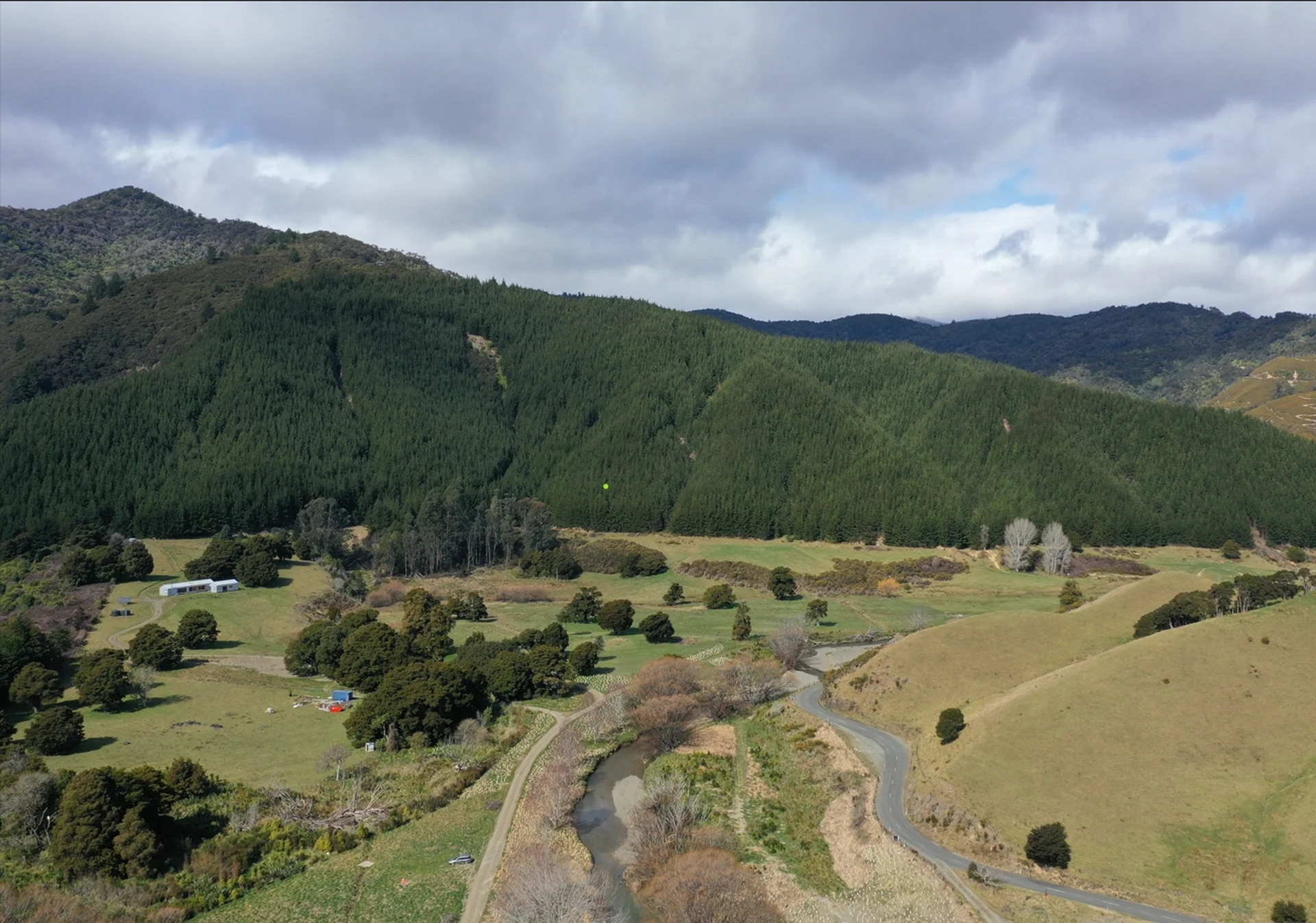
Rivers are far more than water finding its way to the sea. They carry the story of a landscape through centuries. They sustain wildlife, feed wetlands and estuaries, provide water and create places where generations of children can swim, explore and learn about their environment. They cross property boundaries without noticing them, stitching a landscape together, carrying water, wildlife and the consequences of everything that happens along their banks.
Words: Adrienne Matthews
North of Nelson, the Wakapuaka Awa makes a roughly 15-kilometre journey from the Bryant and Wakapuaka ranges to Delaware Inlet, passing through an extraordinary variety of natural environments along the way. The Ludd, Teal and Slater waterways join it on its journey.
It is thought that the area was first settled by Māori in the 12th century and the river was an important source of kai, including Tuna (Eel), Putangitangi (Paradise Duck), Pukeko and Inanga (Whitebait). Middens even reveal bones of extinct birds such as the Moa and Poūwa (Black Swan).
Today it remains the one natural feature that links an otherwise scattered community.
For more than three decades, two people in particular have understood that.
Jan and Robert Fryer arrived in Hira in 1993 looking for land on which to establish a nursery. Robert was a nurseryman who later gained a Bachelor of Environmental Science; Jan's background was in parks, recreation and local government. What neither could have known was how deeply the river beside them would become woven into their lives. “We put our hearts into this river,” they say simply.
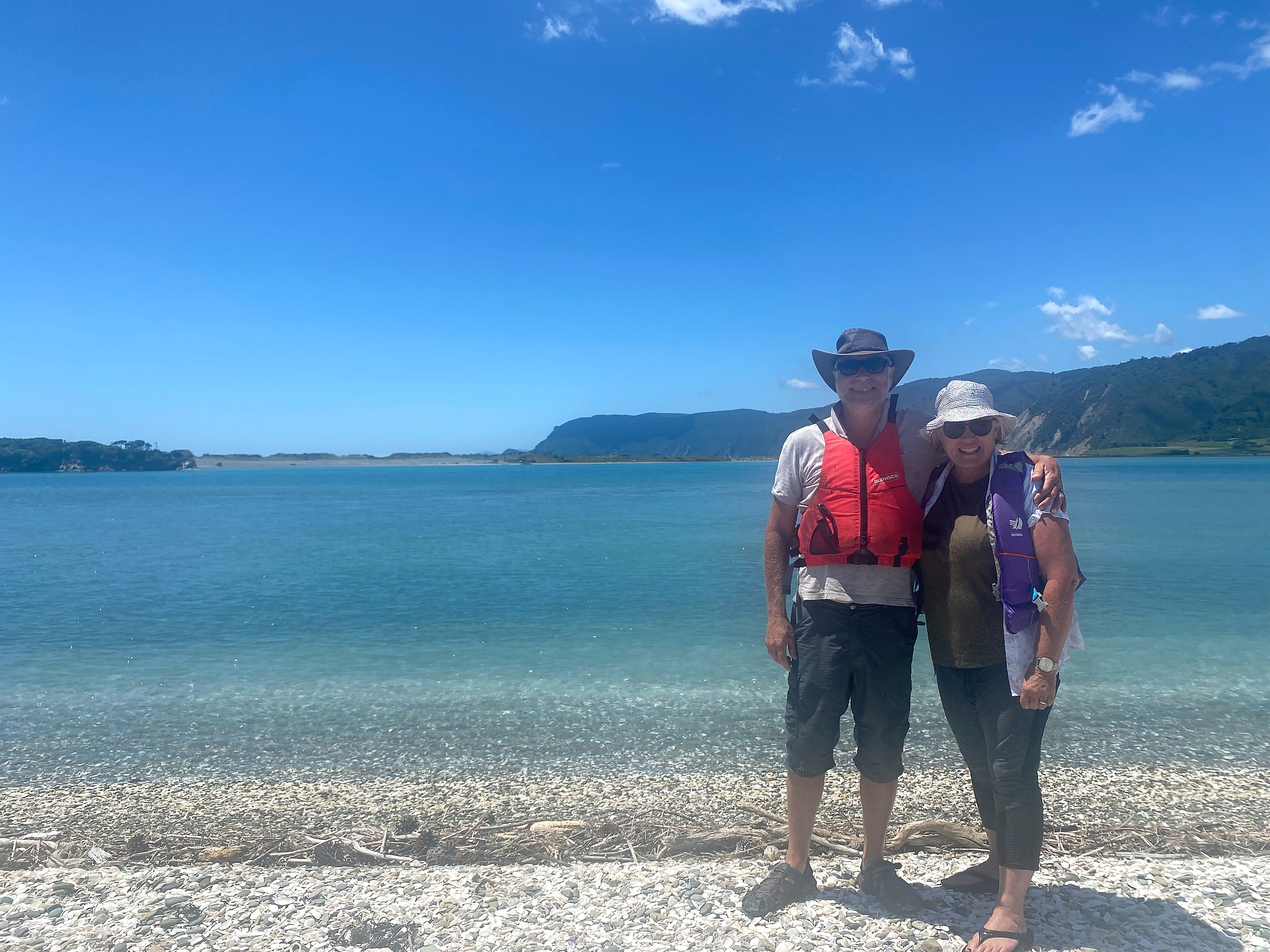
Back then, their memories of the Wakapuaka were very different. Robert recalls walking only 400 metres beside the river and seeing 18 trout. There were deep swimming holes and more water moving through the system. One fishing guide regularly brought clients to the Ross Road section because of the quality of the fishing. Sometimes the river seethed with so many eels you couldn’t see the bottom. Jan and Robert remember taking their own children to swim at Paremata Flats, where youngsters could leap from the bank into a deep pool below.
Over time, much changed. Water extraction, sediment, stock, septic systems, forestry, invasive vegetation and major floods have all played a part. The Fryers describe what has happened not as the result of one villain, but as “death by a thousand cuts.”
It is an important distinction. Restoring a river cannot be achieved by blaming one land use, one organisation or one generation. A catchment is the accumulated result of everything happening within it. That also means its recovery can be the accumulated result of hundreds of positive decisions.
For more than 30 years, the Fryers have planted, advised, lobbied, monitored, organised and, occasionally, simply got tired of waiting and done the work themselves. Their involvement has extended from the upper reaches of the catchment towards Paremata Flats. Jan advocated for the Wakapuaka during her years on Nelson City Council, determined that the city's attention should not stop at Atawhai. “We've advocated for the river not because we're greenies, but because we want a better life for all of us,” she says.
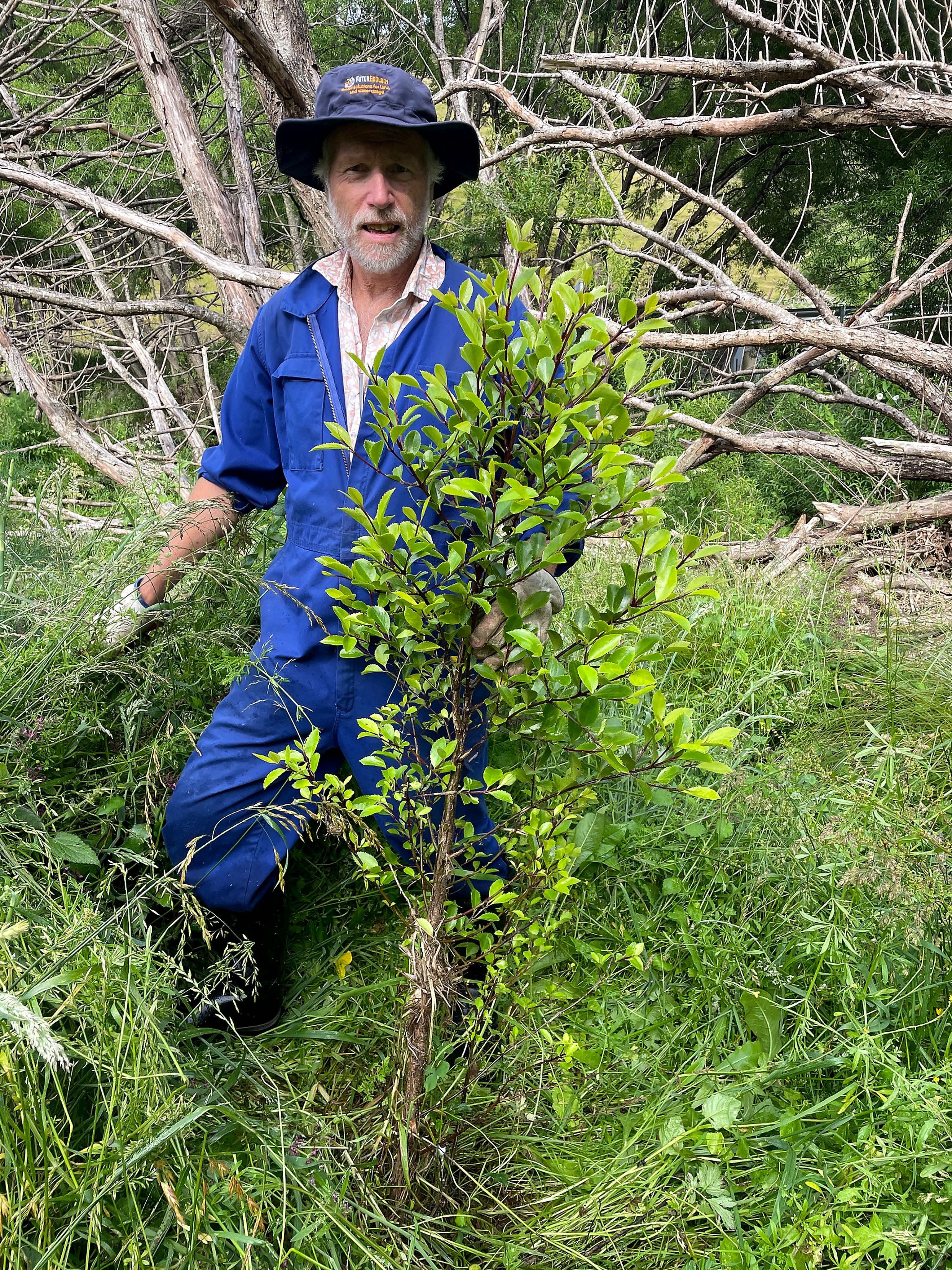
They have fought proposals they believed threatened the river, encouraged landowners to plant stream margins, pushed for better willow management and helped create wetlands and restoration areas. Behind the old Wakapuaka store, tens of thousands of plants have gone into the ground. Their ambition is deceptively simple: eventually create continuity of vegetation and habitat through as much of the catchment as possible because nature works better when its fragments are joined.
There have been many others who have realised the importance of caring for the river too. Hira School has had a long association with the Wakapuaka Rivercare project, established in 1999 to monitor the river and build understanding of its health. Teachers and pupils grew plants, studied the river and helped foster environmental awareness among generations of local children. Jane Pearson was one of the teachers who championed that work.
Community monitoring was also driven for many years by locals including Jim Sinner and Dixie Lane, while Forest & Bird volunteers, rallied by people including Ian Price from Forest & Bird, planted tens of thousands of trees around Paremata Flats from about 2016 onwards.
Some projects were substantial; others were almost invisible. A wetland created here, a riverbank planted there. Weeds removed, traps set. A school nursery established and a landowner persuaded to fence stock from the water.
Individually they might seem small but together, they are beginning to reinvigorate the river.
Perhaps one of the loveliest examples came when a former swimming hole behind the Wakapuaka store, which had gradually filled in, was restored after residents pushed for action. One local heard noise coming from the reserve and initially wondered what was going on before realising what he could hear was children laughing. They were swimming in the river again.
For Jan and Robert, that sound captures much of what river restoration is really about. Their hope for the future is not framed in scientific terminology or planting targets. They want their grandchildren to know the Wakapuaka as a living river – to swim in it, drink from it and gather kai from it.
A new forest rises beside the river
The most dramatic recent chapter in the Wakapuaka story is unfolding on adjoining properties owned by the Kidson family and Richard and Elina Ussher of Cable Bay Adventure Park.
Together, their land encompasses around two kilometres of the river and has become the focus of one of Nelson's largest private-land restoration projects.
The four siblings of the Kidson family and their late mother, along with Richard and Elina, purchased the land before subdividing it into adjoining blocks.
What followed was Wakapuaka Mouri, funded in part by the Ministry for the Environment's Freshwater Improvement Fund and Jobs for Nature, and overseen by a governance group including Nelson City Council, Te Tau Ihu Environment Trust (project managers), the landowners and Ngāti Tama (mana whenua).
The families shared resources, enthusiasm and the benefit of Cable Bay Adventure Park’s machinery to create paths, undertaking the planting and regeneration programme and treating the river as something not divided by boundary fences.
“We bought their land with a strong sense of family legacy,” explains Liz Gavin who wanted her children to have some of the freedom she had experienced growing up – the chance to roam, explore nature and have somewhere close to Nelson where the family could return and recharge.
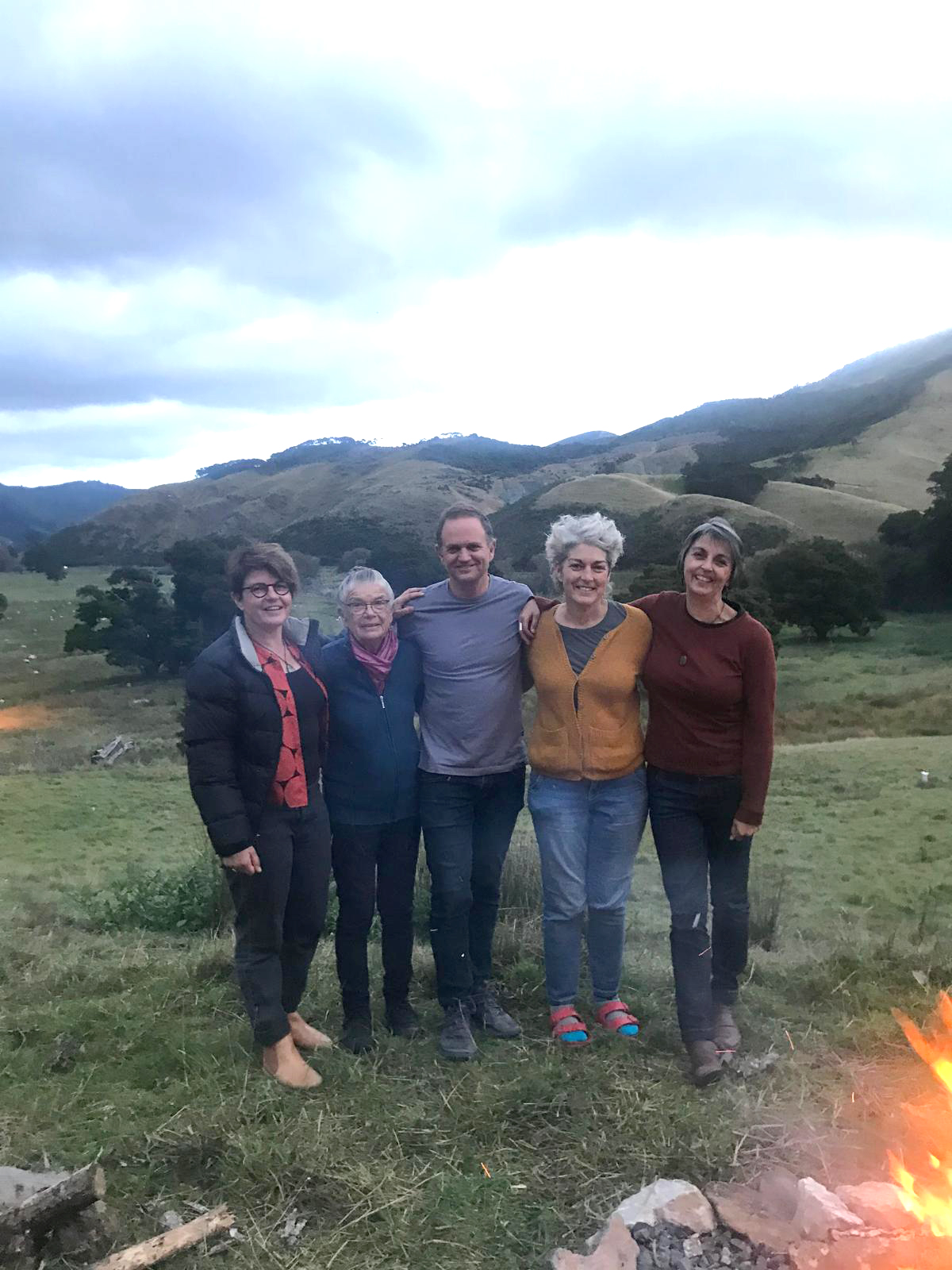
Their 120-hectare property, including 20 hectares of river flats, is very much a family project, with everyone contributing in different ways. Matt takes care of much of the practical organisation, from finances and insurance to maintenance. Sally and Liz are more hands-on with the restoration itself, making day-to-day decisions on the ground and encouraging others to see what can be achieved through similar work. Katrina is part of the wider decision-making. Major decisions are made together as a family, while each person has the freedom to take responsibility within the overall restoration vision.
“Nelson City Council had a representative on the governance group of the Wakapuaka Mouri, Asita Langi,” explains Liz. “The council were particularly good to work with and also provided money for the project. Our family and the Usshers gave in-kind contributions and over five years more than 85,000 plants have gone in across about 14 hectares. Wetlands and tributaries have been fenced and planted, predator trapping introduced and a nursery established using eco-sourced seed collected from native vegetation on the properties.” That last detail is particularly evocative because parts of the new forest are descendants of the old one.
For Richard and Elina, restoration fitted logically with their Cable Bay Adventure Park. The natural environment is a central part of the experience offered there, and planting the river margins could do much more than beautify the landscape. Trees would help stabilise banks, filter runoff and, eventually, cast shade across the water. “We were already doing a lot of rehabilitation work over the property, dealing with invasive species, improving streams and encouraging native plant regeneration,” says Richard. “In another 10 years it'll look amazing and in another 50 years you won't even be able to recognise it.”
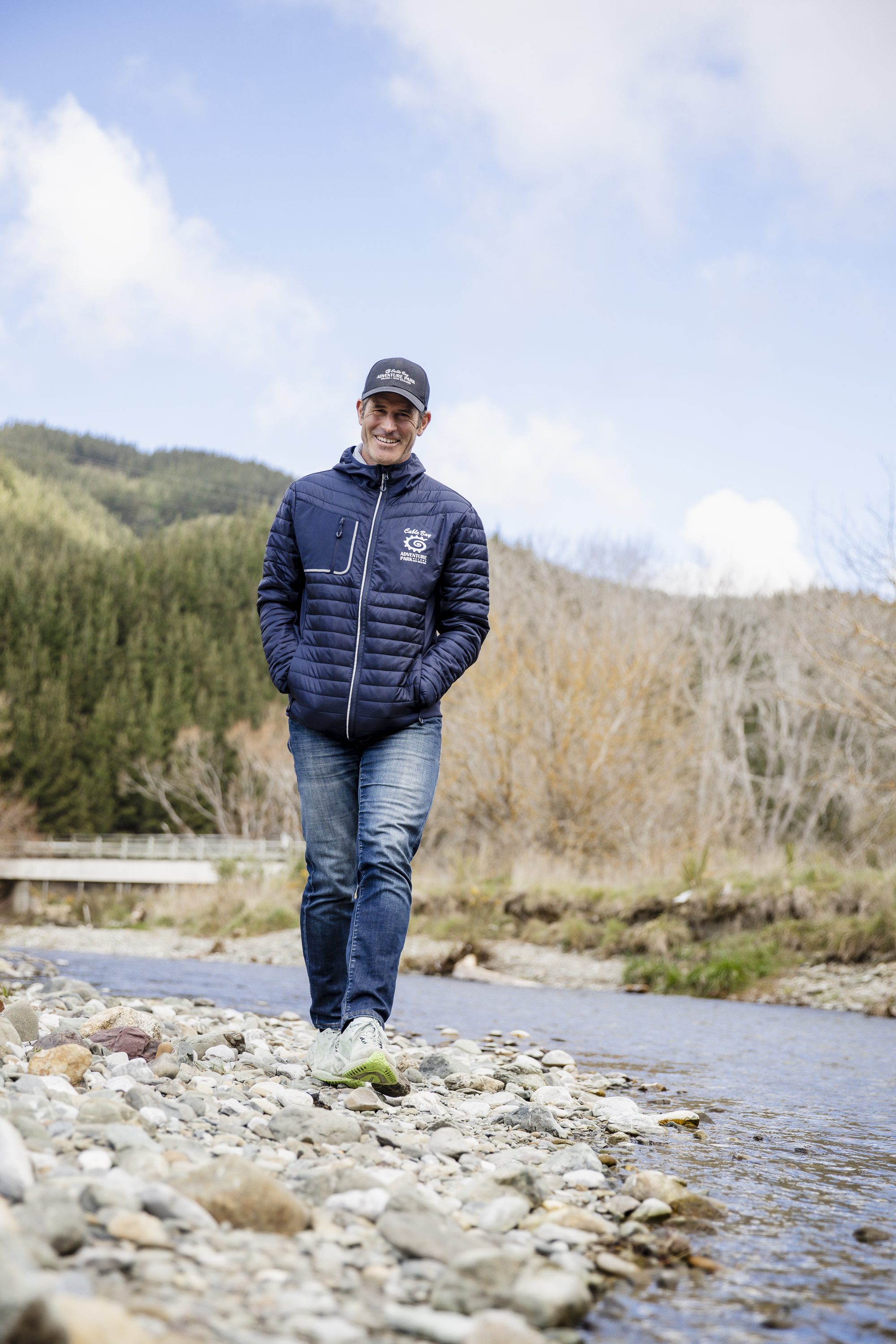
It is, he acknowledges, one of those rare projects people begin knowing they will never see in its full glory. The forest is for generations still to come.
The planting itself has required considerable expertise. Robert Fryer helped determine species, quantities and positioning, while his and Jan’s business, FuturEcology, carried out much of the establishment work and trained people in restoration skills along the way. Plants closest to the river have to survive an unforgiving environment. Floodwater can flatten them, bury them in sediment or rip them from the ground entirely.
In August 2022, that threat became reality. The enormous weather event tore through the Wakapuaka catchment. Thousands of newly established plants were damaged or displaced. “We were adamant that we had to go back,” says Jan. “We had to clean things up.”
“It's one of the risks of planting in that environment,” adds Robert. “Plants have to be close to the stream where the water meets the land. That's the most biologically important area. That's where they can initially be most vulnerable, but where the magic happens.”
Increasingly there are signs that nature is responding. More native birds are being seen and heard through the restoration areas, and in 2025 acoustic monitoring recorded Pekapeka-tou-roa (Long-tailed Bats) at four of five monitoring locations within the Wakapuaka Mouri area.
“It’s exciting to see the increase in bird life,” says Liz. We’re seeing flocks of Kereru (Wood Pigeons), plenty of Ruru (Morepork), Tuis, Bellbirds, Grey Warblers and many others. Our over-arching goal is to eventually join up all the planted areas which in time will create a magnificent canopy.”
The funded phase of Wakapuaka Mouri has finished, but in another sense the project has barely begun. Tens of thousands of young trees still need protection from weeds, pests, floods and drought. As the canopy closes, shade will increase and roots will spread through the soil. Fallen leaves will feed insects, and insects will feed fish and birds.
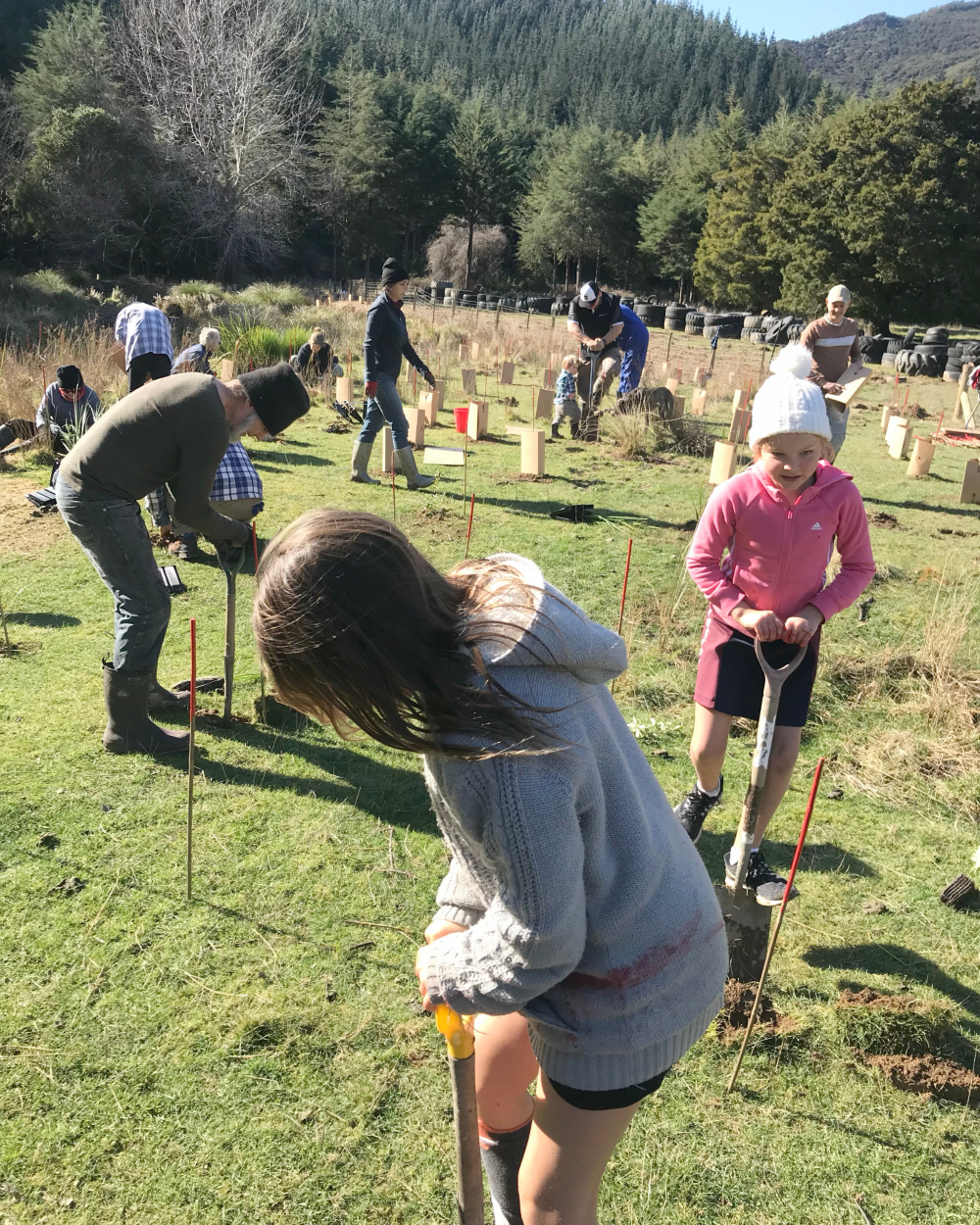
Slowly, from one year to the next, a forest will replace what was once open river margin.
That is the great lesson of the Wakapuaka. Restoration rarely begins with a grand moment. It begins with somebody noticing and deciding to do something. To start planting and refusing to accept that a degraded river is simply the price of progress.
For more than 30 years, people such as Jan and Robert Fryer have kept turning up. Others have joined them – schoolchildren and teachers, neighbours and volunteers, environmental groups, council staff, landowners, contractors and families prepared to surrender part of their land to a future they may never personally see.
The Wakapuaka is a river and landscape in progress, and the hope is that one day there will be plenty of species again making the water their home, a chorus of birds and wildlife all benefitting from the cool green corridor that has been regenerated around the river.
Trees, Tunes, and Recharge
As part of the Nelson Climate Action Group’s Festival September 18 to 27, the public are invited to attend a special event on the Kidson’s property on September 20 to learn about native regeneration through the Wakapuaka Mouri and see for themselves just what can be achieved in five short years.
There will be an opportunity to hear about the successes and challenges, plant a tree and enjoy some kai, kōrero and music.
To register your place and learn more about this event visit nelsontasmanclimateforum.nz
