
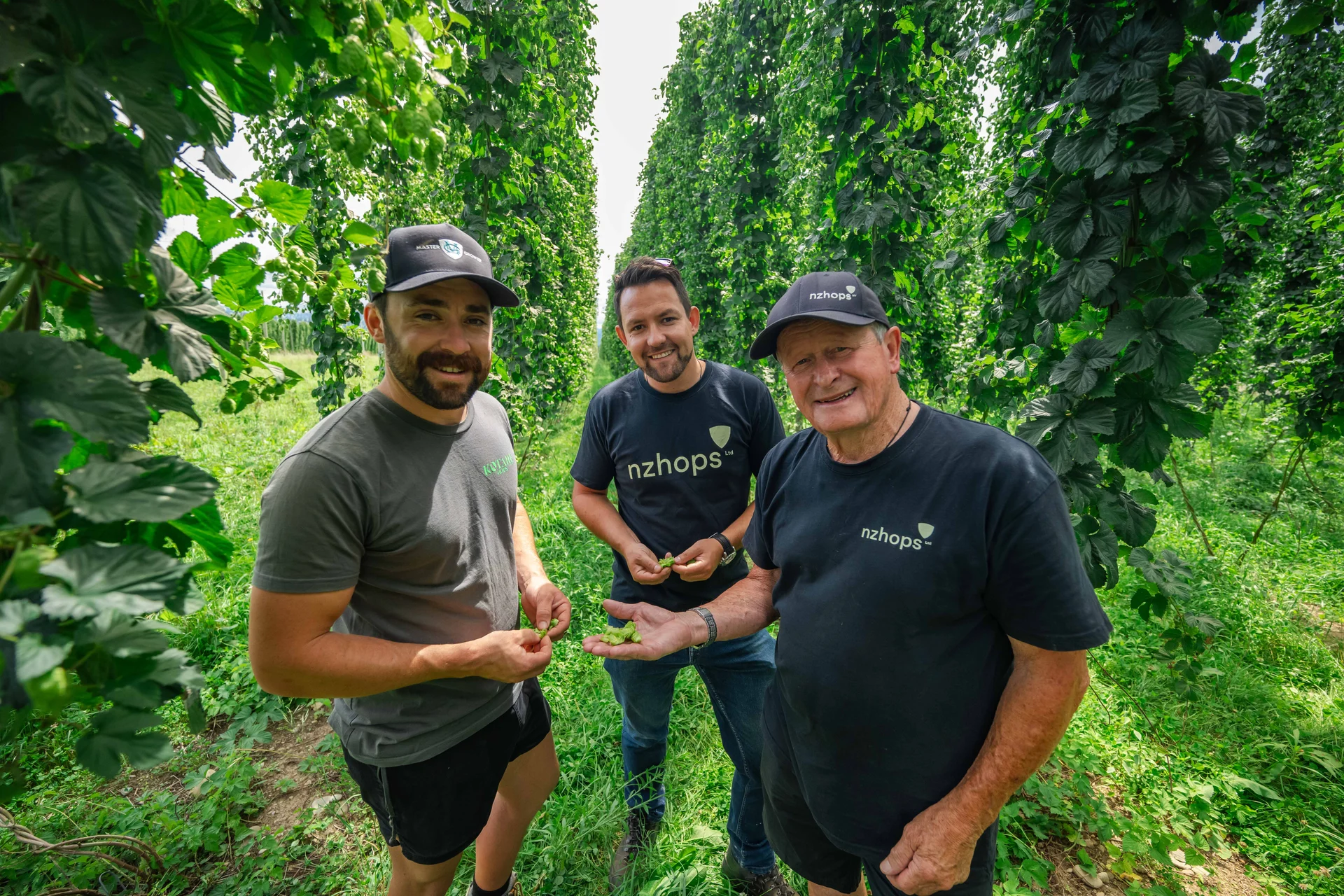
As Tasman’s hop growers begin planting for the new season, attention is turning to the possibility of a drier summer if El Niño develops. It follows a mixed 2026 season, which began with a wet winter and warm spring before delivering strong-quality hops despite challenging conditions. Harvest typically runs from late February to late April, depending on the variety.
“Mother Nature definitely challenged us this season starting with record rainfalls and flooding in winter. This contributed to overall yield per hectare being down by over 5% compared to prior years,” New Zealand Hops chief executive Blair Stewart said in the company’s 2026 harvest report.
“Luckily, our region was also blessed with plenty of sunshine so overall quality was not impacted. Whilst average yields per hectare were down, the overall harvested volumes were well over 20% up on last season. This was in response to increased demand for NZ hop varieties.”
That view was echoed by New Zealand’s largest hop grower, Clayton Hops, in its 2026 Harvest Report.
“The Tasman region – home to over 95% of New Zealand’s hop production – experienced a challenging growing season but delivered excellent harvest conditions, with hot, dry and settled weather from late February onward,” said chief executive Paul Teen.
While yields were challenging, quality remained a strong feature of the season.
“Industry-wide yields were below expectation across most key varieties, due to the difficult growing season. Quality, however, remained high.”
Across many Tasman growers’ harvest reports, 2026 was described as a mixed season, with challenging conditions and lower yields in some varieties.
However, overall production increased, reflecting an expansion in the area harvested. With a predicted El Niño potentially developing for the coming season, water management is firmly on growers’ radar.
“The current El Niño outlook is a risk indicator, not a prediction of a dry summer. Every El Niño is different,” New Zealand Hops supply, quality and innovation manager George Tunstall says. “Growers should ensure water resources, pump houses and irrigation systems are ready and functioning effectively before summer kicks in.”
Water demand will become increasingly important as the crop develops.
“Adequate water is particularly important during rapid canopy development, the lead-up to flowering, flowering and cone/oil formation,” George says.
“Water stress around flowering can also reduce the plant’s yield potential from the outset as the plant is allocating resources to operate efficiently.
“There is no need for major changes at this stage, but growers should check water availability, storage and irrigation systems now. Continue monitoring soil moisture/temps and demand through summer and respond well before visible plant stress occurs.
“The best preparation for dry conditions is to develop a Farm Water Management Plan that identifies the water required by month and ensures irrigation infrastructure can deliver and meter that water when it is needed most.
“Prolonged water stress typically reduces cone size, yield, maturity, alpha acids and impacts hop oil development.”
Clayton Hops may be one step ahead if the coming season does bring drier conditions.
In its 2026 harvest report, the company reported it had begun trialling a new precision water management system focused on optimising irrigation inputs, reducing resource use and improving crop resilience.
By the numbers
• More than 95% of New Zealand's hop production is grown in the Tasman region.
• Yield per hectare was down by more than 5% in 2026 compared with previous years.
• Total harvested volumes were more than 20% higher than the previous season due to increased demand and expanded production.
• Harvest generally runs from late February to late April, depending on the variety.
