
By Samantha Gee/RNZ
Residents divided by the council's decision to remove speed bumps on Nelson's Tāhunanui Hills agree that measures to calm traffic are needed - but are at odds over what that should look like.
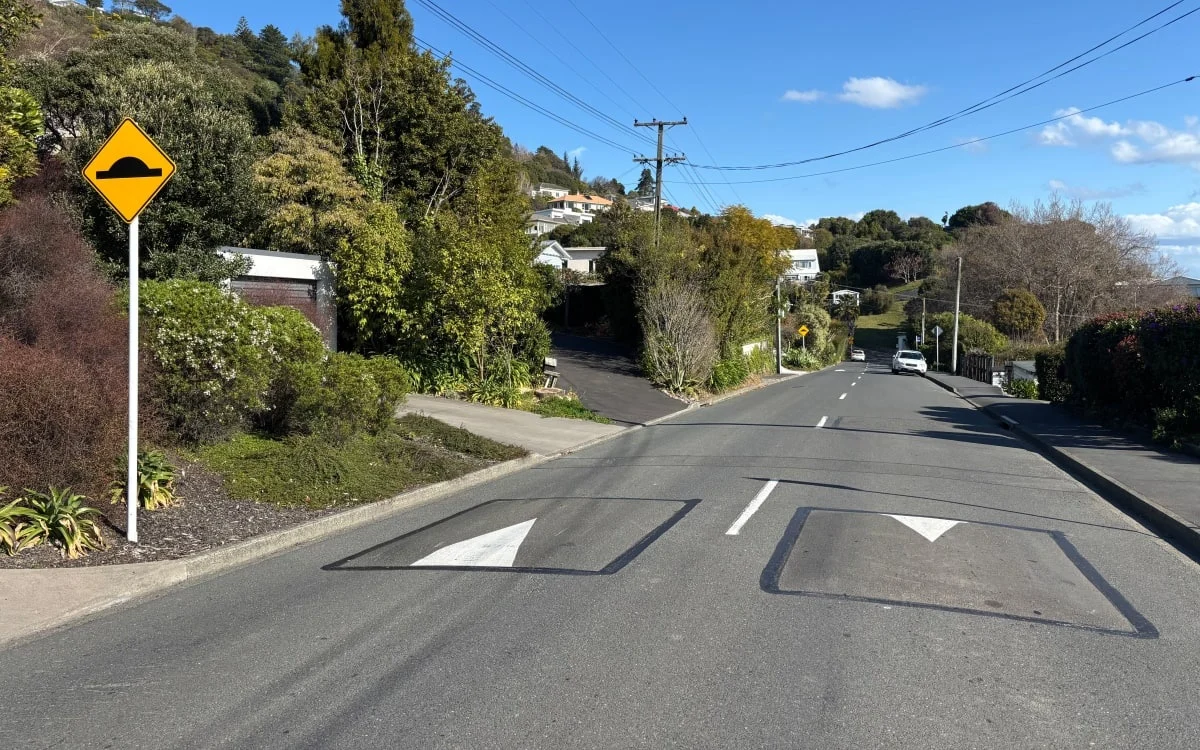
"Speed cushions" were installed as a trial on Moana Ave and Bisley Ave in 2024 to slow traffic and reduce rat-running on the streets above SH6.
In March, the Nelson City Council decided to remove them after surveying public opinion and receiving complaints that they were noisy and disruptive.
A group of residents had since campaigned for them to remain, saying there was strong support for their retention and evidence they had improved road safety.
Last week, Mayor Nick Smith said that as no elected members had changed their position since the 8-5 vote to remove the speed bumps, the council's position was unchanged and the bumps would be removed next month.
He said it was a difficult issue with "quite different, valid, but polarised views".
"I personally view the problem as a symptom of inadequate capacity in our transport network into the city that has not kept up with the region's growth, resulting in this route being used for through traffic for which it was not designed, a problem that is affecting a number of neighbourhoods."
Pauline Puklowski, of the Bisley Moana Speed Bump Retention Group, said the decision showed a "shameful disregard for public safety".
It had left residents angry and pitted neighbours against neighbours, instead of enabling them to work together.
"Between all of us, we actually all want the same thing, we want a safe environment that we can all enjoy living in, and I think we should have been given an opportunity to work together better than this."
Puklowski lives on Bisley Ave, above a hairpin bend, and said the speed cushions had "worked perfectly" to reduce crashes and improve safety over the last two-and-a-half years.
Data from the New Zealand Transport Agency showed that between 2019 and 2023 there were 10 crashes on Bisley Ave and one on Moana Ave.
On Bisley Ave, 80 percent of crashes were attributed to loss of control on corners.
There had been two crashes since the speed cushions were in place.
Puklowski said since the bumps weren't perfect, drivers often swerved to try and avoid them, but she was worried that once they were removed, boy racers would return and more crashes would occur.
"Our main concern now is: where do we go? How do we get some form of protection?"
She said the council had not taken heed of the advice of its staff, nor that of residents who were seeking better safety measures, and it felt like there had been a lack of meaningful community consultation on the matter.
"Spending $70,000 removing a proven safety measure is mind-blowing, quite frankly.
"They've pulled the plug with no plan of how they're going to manage the safety issues."
Nicholas Lunn of the Tāhunanui Hills Residents Group is among those who campaigned for the bumps to be removed.
He was pleased the council had stuck to its position, but said residents wanted "21st century traffic calming solutions, not just bollards which create crashing and vibration and noise".
The reduction in crashes could not solely be attributed to the speed bumps, when there were other factors like the opening of Clarence Drive, which offered an alternative route into central Nelson, he said.
Lunn wanted to see the council work with residents to set up a working group to find a solution that worked on the Tāhunanui Hills, and could be rolled out in other parts of Nelson.
He said there were many initiatives that could be considered, and it was unfortunate the issue had created a rift in the community.
The group wanted to see the speed limit reduced on Bisley and Moana Aves and signage that reads "no through traffic for heavy vehicles".
Lunn said the council could also consider chicanes and putting a request to NZTA to install traffic cameras.
"I'm hopeful that we can actually repair that rift and work together with council to actually come up with a proper solution to this because right now we've got the noisy cushions removed, but we haven't actually sorted out the underlying problem.
"The cushions didn't sort that out anyway because they created other problems, and I know that when we put our heads together, we can create lasting solutions that don't impact negatively on people."
The council said the speed bumps will be removed during routine road surface renewal and vegetation maintenance in the first week of October.
This story was first published on rnz.co.nz
