
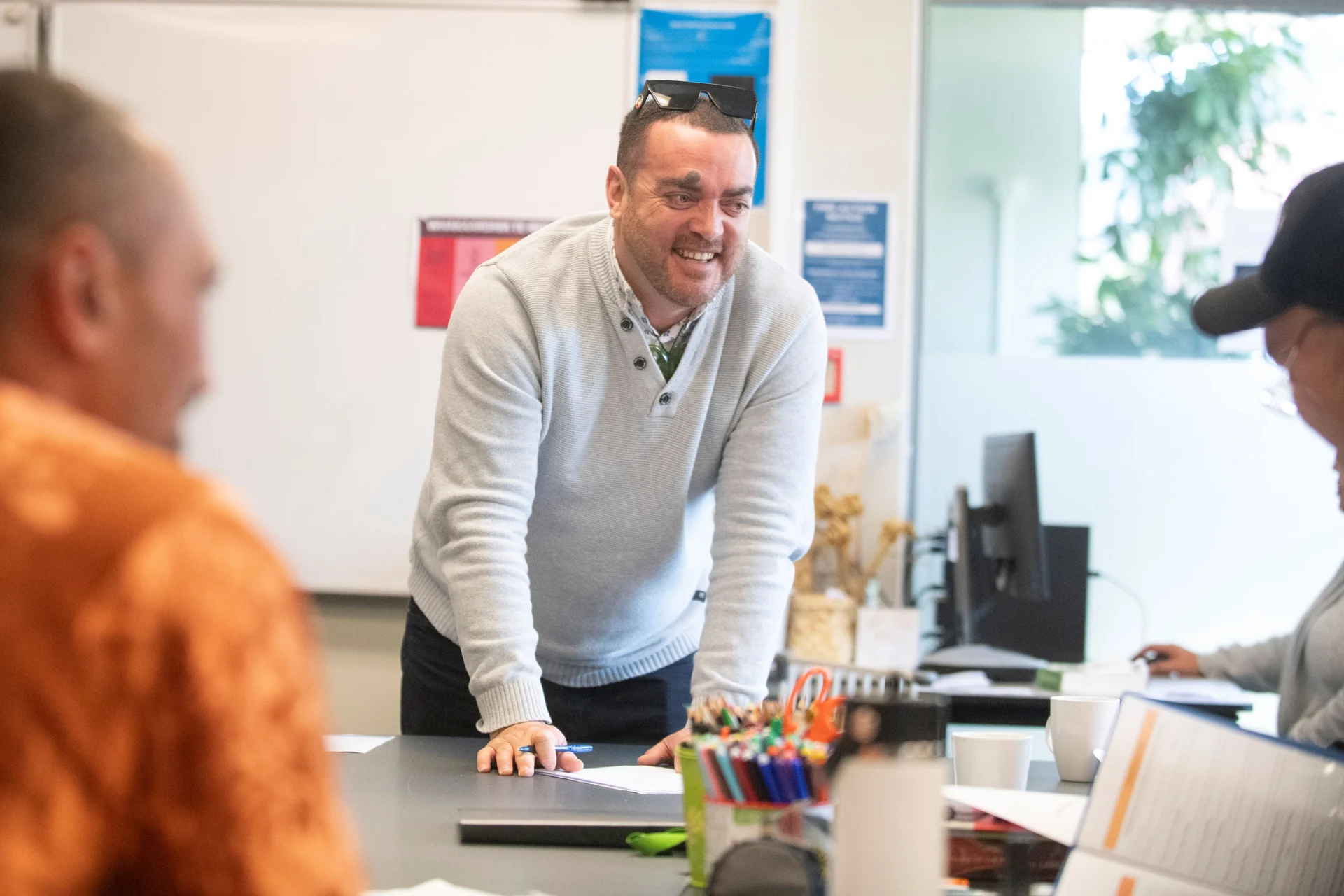
Te reo Māori is a language rich in history, identity and connection. Alistair Hughes explores its place here in Te Tauihu, and meets some of the people helping it thrive in our local community.
Dame Rangimārie Naida Glavish, former president of the Māori Party and cultural advisor, first entered public life in a way which should resonate particularly strongly as we celebrate Māori Language Week (Te Wiki o Te Reo Māori). Working as a national tolls operator in 1984, she was demoted for refusing to stop greeting callers with “kia ora” and use English only. An outcry and prime ministerial intervention resulted in the ‘kia ora lady’ (as she became affectionately known) not only reinstated but promoted to international tolls, where the whole world got to hear her cheery te reo Māori greeting.
In the half century since the establishment of Māori Language Week, te reo has seen what appears to be an upward trajectory. The kōhanga reo and kura kaupapa movements have been well supported in the provision of immersive te reo Māori education for pre - and primary schoolers respectively, and in 1987, Māori was established as an official New Zealand language.
By 2020, Stats NZ were able to report that more than one in six Māori adults spoke te reo and almost a third understood the language ‘at least fairly well’.
In our region, te reo is taught from preschool to tertiary level, the Nelson Marlborough Institute of Technology (NMIT) providing programmes all the way up to level six (advanced full immersion).
Rolland Simmonds, Pouako Reo Māori (Te Reo Māori teacher) is currently acting curriculum area manager for Te Toki Pakohe, the dedicated learning and cultural space at the NMIT campus.
“Level six te reo Māori is a new course in its second year at NMIT,” says Rolland, “and that's due to the demand, which is really good to see.”
He was pleased to find that Māori language and culture were both strong when he arrived in Nelson eight years ago, and believes NMIT provides a safe place for people to learn and reconnect with te reo Māori.
Although Rolland's perception is that the language still has a long way to go to be the first choice for Māori to speak in Nelson, he is always pleased to come across past students in the street, who happily converse with him in te reo. “I get lots of mihi (greetings) when I walk through town, I even get stopped for a hongi.” He believes this is a visible acceptance of te reo, whereas ‘pockets of resistance’ may simply arise from unfamiliarity or lack of comfort with the language. “I think nationally, it will always be a controversial topic. But I don't really care about statistics and what's happening everywhere else because I'm just being me, my natural Māori self.”
Rolland takes satisfaction from the fact that ‘the need to revitalise the language’ is no longer a common phrase, because he believes te reo Māori is thriving, and the benefit of improved fluency in any language is clarity of intention, and improved understanding. “There’s always smiles on our student's faces because they're really eager to learn it, and that’s a really awesome thing. For me, the future of te reo Māori looks great.”
Twenty-five-year-old Bailee Tava is Rolland’s student, but also something of a guiding light for te reo in Nelson in her own right. As a kapa haka performer she brought our region into prominence last year with a waiata presentation which gained millions of views across digital platforms. “It’s had a really positive impact,” she says. “It brought our smaller Māori community to the attention of Aotearoa and showed ‘we are here’.”
Born and raised in Nelson, she attended kōhanga reo as a baby up until starting school. “The Māori medium unit at Victory primary school was ‘reorua’ (two languages): English and Māori. You were learning what other mainstream schools learned, but from a te ao Māori (Māori world) perspective. They have a full te reo Māori immersion unit now.”

Bailee now teaches in this unit at Victory, which she describes as ‘a full circle situation’. With such a rock solid grounding in te reo Māori, what motivated Bailee to continue her study of the language at NMIT?
“I had conversational te reo Māori, because I had learned through kapa haka, pūrākau (traditional Māori oral narratives) my schooling and family as well. But this oral class focuses a lot more on the grammatical.”
Bailee describes her own te reo Māori as ngāwari: “A little bit more ‘chill’, so it's really good to gain that grammatical side because Māori is a language that continuously adapts to the world.”
In terms of wider te reo Māori usage in Nelson, she believes we have something very special going for us. “We're the only rohe (region) in New Zealand that has a tangata tiriti (non-Māori New Zealanders) kapa haka, which is an amazing achievement here. I have noticed such a shift in our tangata tiriti wanting to immerse their children in te ao Māori perspectives, and really welcoming in whakaaro (Māori ways of understanding).”
Bailee believes there has been a huge increase in Māori language visibility, but acknowledges that this doesn’t necessarily equate with fluency. “The te reo journey is a continuous one, you never fully finish.”
Bailee’s uncle, Kane Hart, is just beginning his te reo Māori journey – something he has come to in his own time. “I’ve jumped onto a full-time course this year,” he explains, “originally to do it with my two boys. But as time's gone on, I realised it's not really for them – it’s for me.”
Kane says when he saw his sons were learning the language twice as quickly as he was, he had to focus on himself. “I've always been immersed in the culture, and both my sisters were heavily involved in kapa haka - (Bailee’s mother and aunt). But I had sort of steered away from the language, especially throughout my teenage to adult years. I was embarrassed about being Māori, but not really knowing the language.”
Fatherhood, says Kane, made him realise that it was time to learn, and his goal is simple but important. “I can understand a lot of what's going on when the whānau speak te reo - but I want to be able to give whakautu, – which is to answer. To be able to kōrero Māori with my kids, with my whānau, would be pretty awesome.”

Family played an initial part in Ella Sargent’s introduction to te reo Māori, when her father invited her to join him to learn in evening classes. She went on to discover her purpose in the realm of business and founded Manawa Māori, a Nelson-based company helping New Zealand organisations build a genuine relationship with te reo Māori. “I was lucky my father opened that door and language has stayed with me ever since,” says Ella. “Small amounts of learning held consistently are what sustain a language over years,” she says, “particularly for adults who aren’t going to return to full-time study. That’s the reason Manawa Māori exists in the form it does.”
Ella’s organisation caters to professionals who aren’t able to devote hours to classroom time.
“We keep it short and practical because that’s what people retain and what they actually use.”
She says she received strong support in Nelson and that has been echoed since in other centres. In her experience, Ella notes that the nature of demand for what Manawa Māori offers has moved from translation to a deeper appreciation of te reo Māori as part of organisation’s wider people and culture strategy. “Another language gives you a different way of understanding… it creates context, and it creates connection.”
Ella would love te reo Māori to become something completely ordinary in New Zealand working life. “Not something reserved for a ceremony or a training day, but part of how people greet each other, open a meeting or sign off an email. Language grows through use and exposure.”
From adult exposure and study of the language to far younger students, Bruno Watkins is deputy principal of Nayland College, and also teaches year nine te reo Māori. This is a role he found himself unexpectedly filling after the incumbent language kaiako (instructor) left. “Te reo Māori teachers are like unicorns,” says Bruno, “they’re very rare, and you need to look after them because they're often burnt out with the extra workload that comes with being a Māori teacher in a school, where they're the minority.”
But having said that, he enjoys his role very much. “I've now had three years teaching that course, which has been great. It’s really cool to see kids enjoying the language, feeling confident – whether they're Pākehā or Māori – to engage in the language, be happy learning about our culture and to say that they enjoy the class.”
Bruno was motivated to improve his own te reo when he became a father. “I decided that the language was important and that I would learn to speak to my child in te reo.” He laughs as he recalls reading Māori academic and language guide author Scotty Morrison’s books while his infant son slept on his chest during those early years.
Having studied te reo Māori himself, the experience informs Bruno’s teaching because he knows students aren’t always going to get it right. “My number one goal is to ensure they have a really good experience in my class. I really want them to feel comfortable and safe, and then they're more likely to really give it a go.”

Widely speaking, Bruno feels optimism for the continual growth of te reo Māori. “We've got about 18% Māori here at Nayland, among 1400 kids in total. So there's a lot of exposure for the students to Māori, and you've got a new generation of young people coming through from fluent te reo speaking homes.”
He believes improved fluency brings many advantages, from the well established benefits of language learning for a young developing brain, to a more holistic understanding of our land and its people. “Language doesn't sit outside culture. You have to learn it within that framework – they go hand in hand. Te reo gives you insight into the Māori worldview, which I think is incredibly important for all students, because then you have an insight into understanding each other. And that appreciation is better for our society.”
One of Bruno’s te reo Māori students is Milan Kere-Walker, a year ten student at Nayland College.
“I wanted to learn more about my whakapapa and where I came from,” she says, “connecting the place that I live and its history is a part of who I am, being Māori.”
Milan says she enjoys learning the language because of the connection she can make with others. “My koro (grandfather) is fluent in te reo so I converse with him. And my friends – I have a few that are learning with me as well.”
She feels that the language is vital on a national level as well, having become more aware of its presence since beginning her own studies. “I like learning what my ancestors spoke and how it has continued over these years. Living in New Zealand, te reo is a big part of our history, and I think that's really important.”
Bruno Watkins also feels that the generally perceived optimism for the future of te reo Māori does need to be tempered with note of caution, however. “In the past couple of months we've had English become our official language, even though it’s not under threat – it’s already global, well resourced and widely spoken.”
He points out the detrimental effect this move can have. “It takes funding away from te reo, a language that is already disadvantaged heavily, and from bringing our country up to a place where te reo continues to grow and more people speak it, see it and hear it. This sends a message that is really concerning, and it highlights the political sphere we're in at the moment.”
It is a point to consider carefully as we celebrate Te Wiki o te Reo Māori, (Māori language week) this year.
Kupu to know
Te reo Māori: Māori language
Pouako Reo Māori: Māori language teacher
Kōhanga reo: total immersion Māori language early childhood education centres
Reorua: two languages/bilingual
Pūrākau: traditional Māori oral narrativesencoding knowledge and values
Te Ahu o te Reo Māori: Government supported Māori language education
Kaupapa Māori: core values
Te ao Māori: perspective/worldview
Mātauranga Māori: knowledge
Tikanga: correct procedure, custom and protocol
Kapa haka: traditional performing arts
Whakapapa: genealogy, lineage, and descent.
Tangata whenua: Māori – people of the land
Tangata tiriti: non-Māori living in New Zealand by right of the Treaty of Waitangi
Pākehā: ethnic identity for New Zealanders of European or non-Indigenous descent
Hapori: community, society
Te Tauihu o te waka a Māui: Prow of the canoe of Maui – the geographical top of the South Island
(Source: Te Ara The Encyclopedia of New Zealand, Te Aka Māori Dictionary)
